
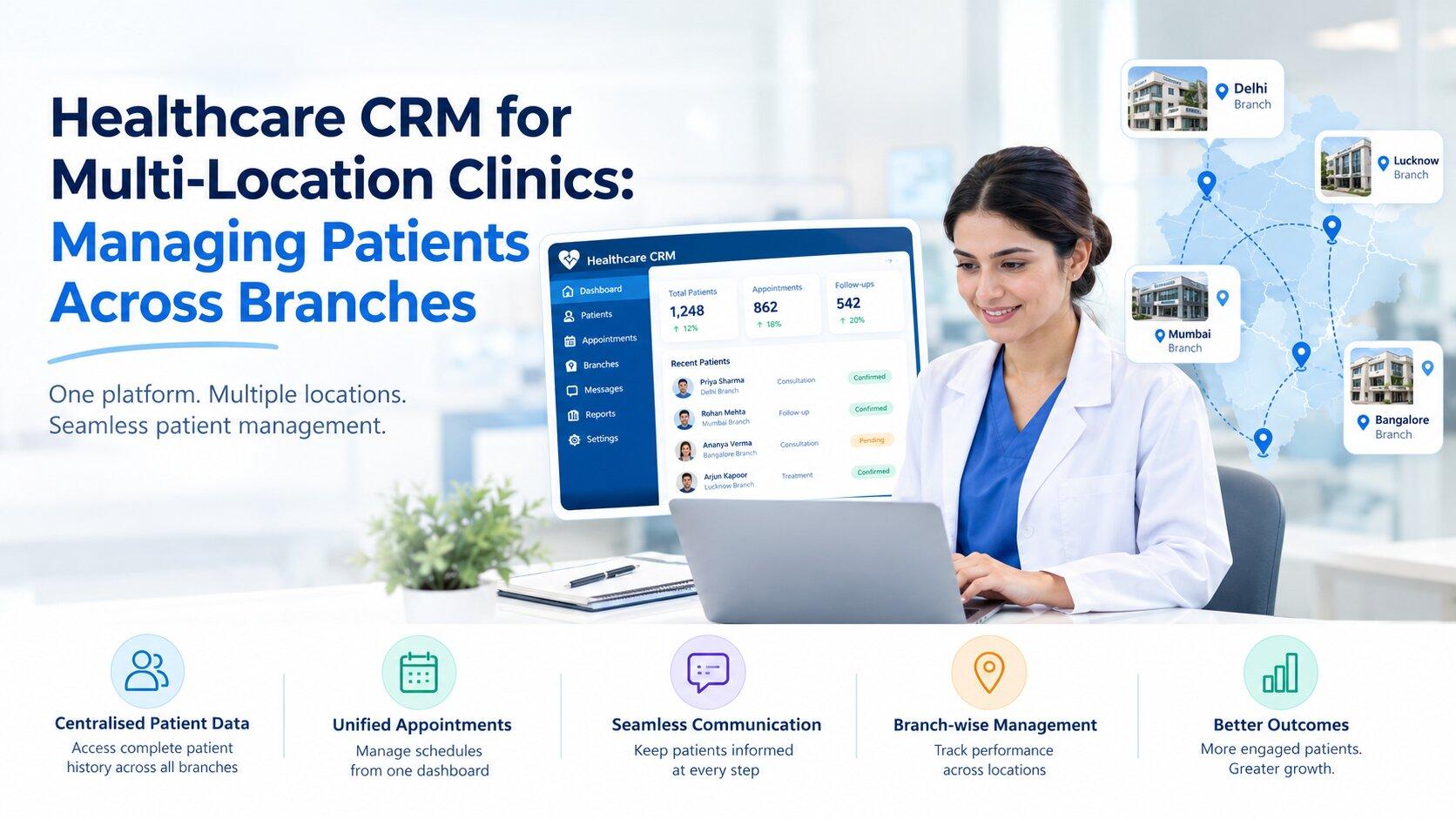
Managing a single healthcare clinic requires proper coordination between appointments, patient records, staff, and follow-ups. When a healthcare organisation operates across multiple locations, these tasks become more complex. Each branch may have its own reception team, appointment schedule, patient enquiries, and daily operations. Without a connected system, important information can get lost, communication can slow down, and patient experiences may vary between branches.
A healthcare Customer Relationship Management (CRM) system helps clinics manage these activities through a central platform. It allows teams to track patient enquiries, coordinate appointments, manage follow-ups, and maintain better communication across locations. For growing healthcare organisations, the right CRM can make daily operations easier while helping teams deliver a more consistent patient experience.
Why Do Multi-Location Clinics Need a Healthcare CRM?
Managing multiple branches involves more than keeping track of appointments. Clinic administrators need to understand how each location handles enquiries, converts them into appointments, and maintains communication with patients.
When every branch uses separate spreadsheets, registers, or disconnected software, accessing information becomes difficult. Staff may not know whether an enquiry has been addressed or whether a patient needs a follow-up call. Managers may also struggle to compare performance across locations.
Healthcare CRM software brings these activities together. It gives authorised teams access to relevant information and helps management monitor operations across branches. Solutions such as those offered by Ledsak reflect the importance of connecting enquiry management with follow-up processes, helping healthcare teams build a more organised approach to patient communication.
A centralised system can help clinics:
Track patient enquiries from different sources.
Manage appointments and follow-ups.
Maintain organised patient communication records.
Monitor enquiry-to-appointment conversion.
Review branch-level performance.
Reduce repetitive administrative work.
These benefits help healthcare organisations manage growth without making daily processes unnecessarily complicated.
Common Challenges in Managing Patients Across Branches
1. Scattered Patient Information
Patient enquiries may come through phone calls, websites, social media, WhatsApp, and online advertising campaigns. When each branch records this information differently, staff can struggle to find accurate details.
Centralised patient management software helps bring enquiry records into one organised system, making it easier for authorised staff to access relevant information.
2. Missed Follow-Ups
A patient may enquire about a treatment but postpone booking a consultation. If the team does not follow up at the right time, the enquiry may remain unanswered or be forgotten.
A healthcare CRM can help teams schedule reminders, assign follow-up tasks, and track communication. This gives staff a clearer process for staying in touch with prospective and existing patients.
3. Limited Visibility Across Locations
Clinic owners need to know how different branches are performing. However, collecting reports manually from several locations can take time and make comparisons difficult.
A shared dashboard can help managers review enquiry volumes, appointment bookings, follow-up activity, and other operational indicators across branches.
4. Inconsistent Patient Communication
Different branches may follow different processes for responding to enquiries or confirming appointments. This can create an uneven experience for patients.
Standardised communication workflows help teams follow similar procedures while allowing each location to manage its specific requirements.
Key Features to Look for in Multi-Location Healthcare CRM
Choosing the right CRM requires an understanding of how the organisation operates. A useful platform should support everyday clinic activities and provide visibility across locations.
Centralised Patient Enquiry Management
A multi-location healthcare CRM should help capture and organise enquiries from different channels. Teams should be able to identify the enquiry source, assign responsibility, record interactions, and check the current status.
This reduces the chances of duplicate entries and unanswered enquiries.
Branch-Wise Access and Management
Each clinic should be able to manage its daily activities while authorised administrators maintain an overview of all locations. Role-based access is important because staff members should only be able to view or manage information permitted by their responsibilities.
This structure supports coordination without giving every employee unrestricted access to patient data.
Appointment and Follow-Up Tracking
The software should help staff track consultation requests, appointment status, reminders, and pending follow-ups. Automated reminders can reduce manual effort and help teams maintain timely communication.
Clinics should also check whether the CRM integrates with their existing appointment or practice management systems.
Reporting and Performance Tracking
A central reporting system can help managers understand how each branch handles enquiries and appointments. Useful metrics may include response times, appointment conversion rates, pending follow-ups, and enquiry sources.
These insights help management identify operational gaps and improve processes based on actual performance.
Communication History
A consolidated interaction history allows authorised staff to review previous conversations and understand the status of an enquiry. This is particularly useful when patients contact a different branch or when responsibility moves between team members.
However, clinical records and treatment details may require a dedicated electronic health record or practice management system. A CRM should not automatically be treated as a replacement for these systems.
How Multi-Location Clinic Management Software Improves Operations
The right software can simplify coordination between branches and reduce the administrative burden on clinic teams.
Better coordination: Staff can track enquiries, assign tasks, and monitor pending actions through a shared workflow.
Improved response times: Reminders and task assignments help teams respond to enquiries without unnecessary delays.
Clearer management reports: Owners can compare branch performance and identify locations that need additional support or process improvements.
More consistent patient experiences: Standardised workflows help clinics maintain similar communication practices across locations.
Reduced manual work: Automated tasks and organised records can reduce dependence on spreadsheets and repeated data entry.
These improvements depend on proper implementation, staff training, and consistent use of the system. Software alone cannot solve operational problems if teams do not follow the agreed processes.
How to Choose the Best CRM for Multi-Location Healthcare Practices
The best CRM for a healthcare organisation depends on its size, workflows, and existing technology. A platform suitable for two branches may not meet the requirements of a network with many locations.
Before making a decision, consider the following factors:
Scalability: Can the system support additional branches as the organisation grows?
Ease of use: Can reception teams and managers use it without a complicated learning process?
Centralised reporting: Does it provide an overview of activity across locations?
Integration: Can it work with existing communication, appointment, and practice management tools?
Data security: Does it offer appropriate access controls, secure data handling, and audit capabilities?
Customisation: Can workflows be adjusted to suit different branches and services?
Training and support: Is assistance available during setup and ongoing use?
Clinics should also check how the system handles patient consent, communication preferences, data retention, and applicable privacy requirements.
A practical evaluation should include the staff members who will use the software daily. Testing common workflows before implementation can help identify gaps early.
Healthcare CRM for Multiple Branches: Why Centralisation Matters
Centralisation does not mean every branch must operate in exactly the same way. Each location may have different staffing arrangements, service offerings, or appointment patterns. The goal is to create a shared operational structure that keeps essential information accessible to the right people.
For example, when a patient submits an enquiry through a website, the CRM can record the enquiry, assign it to the relevant branch, and help the team track the next action. Managers can then review whether the enquiry progressed to an appointment.
This connected approach makes it easier to identify delays, improve follow-up practices, and understand the patient acquisition process across locations.
Multi-branch healthcare management software is most useful when it supports clear responsibilities, reliable reporting, and consistent processes rather than simply storing information in one place.
How Ledsak Can Help Healthcare Teams Manage Patient Enquiries
Managing patient enquiries effectively requires more than generating leads. Healthcare teams also need a reliable process to respond, follow up, and move interested patients towards appointments.
Ledsak focuses on healthcare technology and addresses the operational gaps that can occur between an incoming enquiry and a booked appointment. For clinics handling enquiries through phone calls, websites, WhatsApp, Google Ads, and social media campaigns, a structured approach to enquiry management can help teams maintain better visibility over pending actions and patient communication.
For multi-location clinics, this type of approach can support clearer task ownership, organised follow-ups, and better visibility into the enquiry-to-appointment journey. Healthcare organisations should evaluate how Ledsak's available capabilities align with their branch structure, existing systems, and daily workflows before implementation.
Looking to improve enquiry management across your healthcare organisation? Connect with Ledsak to explore how healthcare technology can help your team organise enquiries, strengthen follow-ups, and create a more structured process for managing patient appointments.