
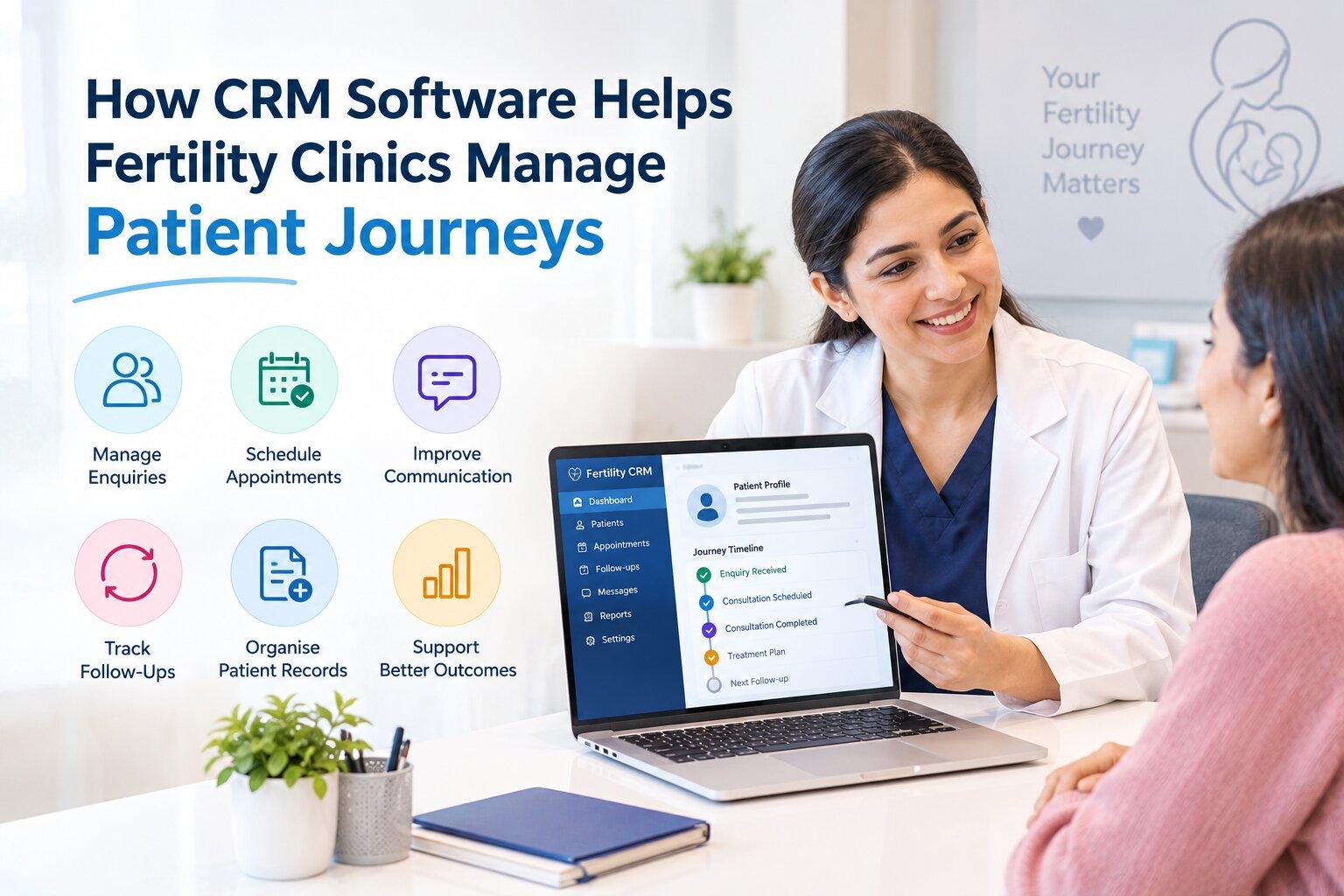
The journey through fertility treatment involves more than medical appointments. Patients may spend weeks or months researching their options, attending consultations, completing tests, and deciding on the next steps. During this time, they often have questions, concerns, and changing expectations. A delayed response or missed follow-up can add to an already demanding experience.
For fertility clinics, managing these interactions requires careful coordination between reception teams, counsellors, clinical staff, and administrative departments. A Customer Relationship Management (CRM) system can help organise communication and keep patient-related tasks on track. The right fertility clinic CRM gives teams a clearer view of each patient's journey, from the first enquiry to ongoing treatment coordination.
Why Patient Journey Management Matters in Fertility Care
Fertility treatment is rarely a single-visit process. A patient may begin by enquiring about IVF, schedule an initial consultation, undergo diagnostic testing, discuss treatment options, and return for further appointments. Each stage requires timely communication and proper coordination.
When clinics rely on scattered spreadsheets, paper records, or separate communication channels, important details can be overlooked. An unanswered enquiry may remain unnoticed, a consultation reminder may be missed, or a patient may need to repeat information already shared with the team.
Fertility clinic patient journey management helps bring these interactions into a more organised workflow. Instead of treating every appointment as an isolated event, clinic teams can understand where a patient stands in the overall process and identify the next action required.
A CRM supports this administrative continuity while allowing clinical decisions to remain with qualified healthcare professionals.
How CRM Software Helps Fertility Clinics Manage Patient Journeys
1. Organising Patient Enquiries from the First Contact
A patient's first interaction with a fertility clinic may happen through a website form, phone call, WhatsApp message, social media page, or online advertising campaign. Managing enquiries from several channels can become difficult when information is recorded manually.
CRM software for fertility clinics helps collect enquiry details in one place, record the source of contact, and assign responsibility to the appropriate team member. Staff can review the enquiry status and identify requests that still need a response.
This creates a more dependable starting point for patient communication. It also helps clinic managers understand which channels generate enquiries and how effectively teams respond to them.
2. Keeping Consultations and Follow-Ups on Track
The period between an initial enquiry and a consultation can influence how patients perceive a clinic. People may need additional information before booking or may postpone a decision because they have questions about the process.
A fertility clinic CRM can help staff schedule follow-up tasks, record previous interactions, and track pending responses. Automated reminders, where available, can reduce the need for manual tracking.
These features help teams maintain contact without making communication feel intrusive. Staff can follow the clinic's communication guidelines and respect each patient's preferences when planning outreach.
3. Creating a Clear View of Each Patient's Journey
Fertility care involves several stages, and patients may move through them at different speeds. Some may be exploring treatment options, while others may have completed an initial consultation and be preparing for further assessments.
IVF CRM software can help teams organise administrative milestones, consultation status, and pending actions. Staff can identify whether an enquiry requires a call, an appointment needs confirmation, or a patient is waiting for non-clinical information.
This visibility reduces uncertainty within the administrative team. However, a CRM should not replace clinical records or independently determine treatment eligibility, medical recommendations, or treatment progression.
4. Improving Coordination Between Departments
Fertility clinics often involve reception teams, patient counsellors, billing staff, and clinical professionals. Each group has different responsibilities, but their work frequently overlaps.
Without a shared workflow, a patient may receive repeated calls or encounter delays while waiting for information to move between departments.
Fertility patient management software can help teams record interactions, assign tasks, and monitor outstanding requests. Role-based access allows information to be shared with authorised staff according to their responsibilities.
A clearer division of tasks helps reduce duplication and gives patients a more coordinated experience.
5. Supporting Communication Throughout Treatment
Patients may need appointment confirmations, preparation instructions approved by the clinic, billing information, or updates about administrative requirements. Communication can become difficult to manage when several team members handle different stages.
A CRM provides a structured way to record conversations and track communication tasks. Staff can review previous interactions before responding, reducing the need for patients to explain the same administrative concern repeatedly.
This is especially useful for clinics that want to maintain continuity across multiple visits. Sensitive information must still be handled carefully, with appropriate consent, access controls, and secure communication practices.
Essential Features to Look for in IVF Patient Management Software
Not every CRM is designed for the specific workflows of fertility care. Clinics should assess their requirements before choosing a platform.
Important features include:
Centralised enquiry tracking: Records enquiries from different channels and tracks their current status.
Appointment coordination: Helps teams manage consultation requests, confirmations, and reminders.
Follow-up management: Assigns tasks and flags pending communication.
Patient interaction history: Keeps authorised staff informed about previous conversations and outstanding requests.
Workflow management: Organises administrative activities across different stages of the patient journey.
Reporting and analytics: Helps management review response times, appointment bookings, enquiry sources, and follow-up completion.
Access controls: Limits access to sensitive information according to staff roles.
Clinics should also check whether the system integrates with existing scheduling, billing, and electronic medical record platforms. A CRM may manage communication and administrative workflows, while specialised clinical software handles medical records and treatment-related documentation.
How to Choose the Best CRM for Fertility Clinics
The best CRM for fertility clinics is one that fits the clinic's actual workflow rather than forcing staff to adapt to unnecessary complexity.
Start by identifying common operational gaps. Are enquiries being missed? Do patients wait too long for responses? Are follow-up responsibilities unclear? Is management unable to track the progress of enquiries across departments?
Once these problems are clear, compare platforms based on ease of use, workflow flexibility, integration capabilities, reporting, staff training, and data protection.
Fertility clinics should pay particular attention to privacy. Reproductive health information is sensitive, so access permissions, secure data handling, consent management, and compliance with applicable privacy requirements must be evaluated before implementation.
A well-selected system should make routine tasks easier while preserving the personal attention that fertility care requires.
How Ledsak Fits into Fertility Clinic Enquiry Management
Managing patient enquiries is an important part of running a fertility clinic, especially when prospective patients reach out through multiple digital and offline channels. Generating enquiries is only one part of the process. Teams must also respond promptly, maintain communication, and help patients understand the next administrative step.
Ledsak focuses on healthcare technology and the gaps that can arise between an incoming enquiry and a booked appointment. Its approach is relevant to clinics looking to bring more structure to enquiry handling, follow-up activities, and appointment coordination.
For fertility clinics, a clearly defined enquiry management process can help teams identify pending responses, maintain interaction records, and understand where prospective patients may be dropping out of the booking process. Clinics considering Ledsak should assess its available capabilities against their specific workflows, existing systems, and patient communication requirements.
Make Every Patient Interaction Count with Ledsak. Explore how Ledsak can help your fertility clinic streamline follow-ups, organise enquiries, and simplify appointment coordination.