
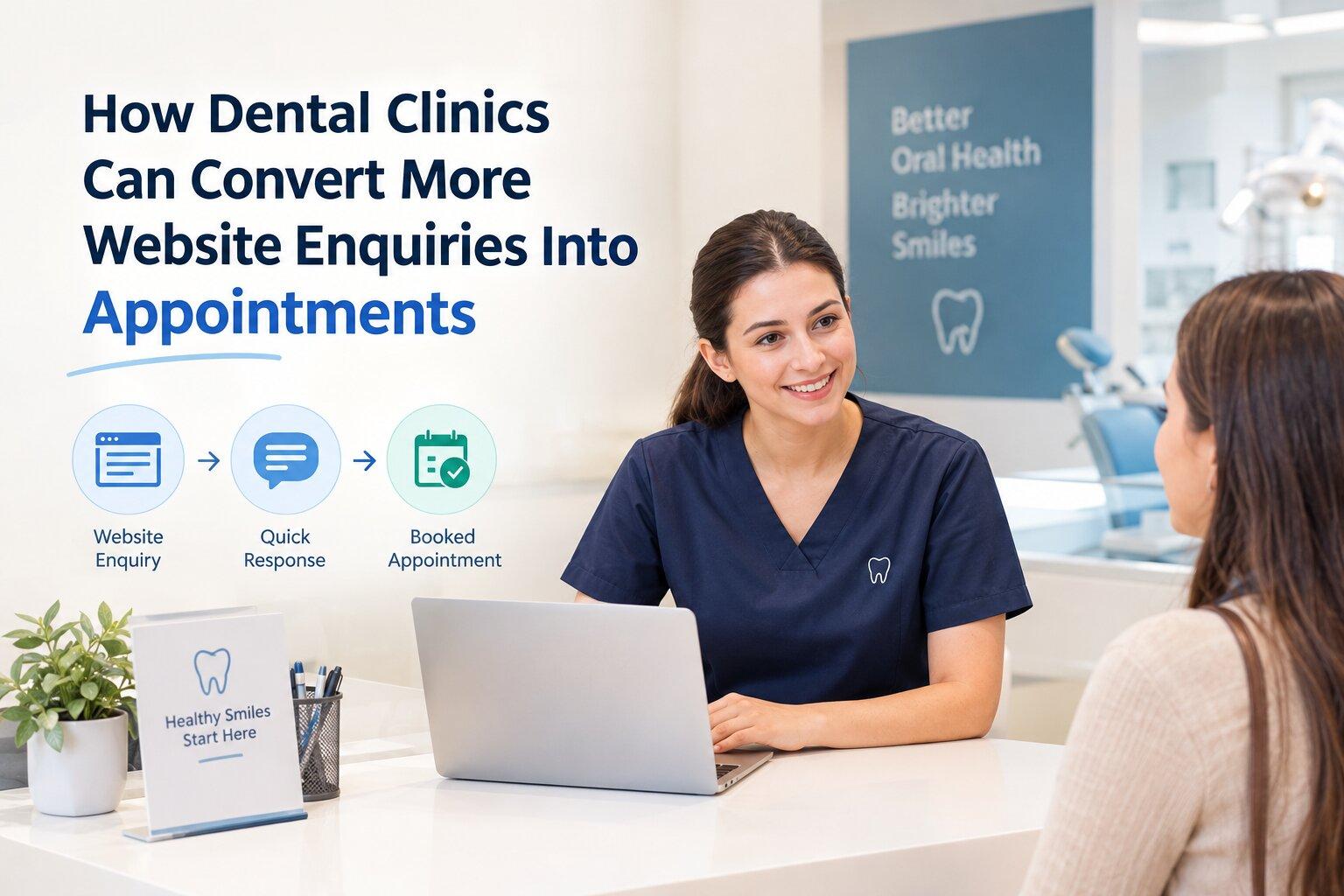
A dental clinic can receive dozens of website enquiries every week and still struggle to fill its appointment calendar. Someone submits a contact form after searching for a root canal specialist. Another asks about braces through WhatsApp. A third wants to know the cost of dental implants but never receives a timely response.
These enquiries represent potential patients, yet many never progress to a consultation.
The problem is not always a lack of website traffic or marketing investment. Sometimes, the gap lies between the moment a person expresses interest and the clinic's first meaningful interaction with them.
Improving this process requires more than generating leads. Dental clinics need a reliable way to respond, understand patient requirements, coordinate appointments, and follow up without letting enquiries disappear. This is where a structured approach to dental lead conversion can make a measurable difference.
1. Treat Every Enquiry as the Start of a Patient Conversation
Patients visit dental websites with different concerns. Someone experiencing tooth pain may want an appointment today, while someone considering orthodontic treatment might spend weeks comparing options.
A standard response that offers the same information to everyone can miss these differences.
Start by identifying what each enquiry needs. Website forms can include simple fields such as the treatment of interest, preferred appointment time, and contact details. Keep the form short enough to complete easily, particularly on mobile devices.
The clinic's first response should acknowledge the patient's concern and explain the next step. For example, a person asking about dental implants may need a consultation to understand their suitability, treatment options, and costs.
Personalised communication helps patients feel heard instead of making them feel like another entry in a lead list.
2. Respond Before the Patient Moves On
Speed matters when someone is comparing dental clinics. A potential patient who receives no acknowledgement may contact another practice before your team gets around to responding.
Establish a clear process for handling new enquiries during and outside clinic hours. Assign responsibility for incoming website forms, calls, and WhatsApp messages so the team knows who must respond.
An immediate acknowledgement can confirm that the enquiry has been received, while a staff member can follow up with relevant information and appointment options.
However, fast responses alone are not enough. The conversation should answer the patient's actual question and move towards a practical next step.
For clinics handling enquiries across multiple channels, dental CRM software can bring these conversations into a central system. This reduces the risk of delayed responses caused by messages sitting in separate inboxes.
3. Make Booking an Appointment Feel Simple
Even interested patients may hesitate when booking involves repeated calls, unclear availability, or too many steps.
Review your booking process from the patient's perspective. Can someone find your clinic's location easily? Is the contact number visible on mobile? Can they understand how to request an appointment without navigating several pages?
Dental clinics can remove friction by offering clear appointment options, sharing relevant clinic information, and confirming the booking promptly.
Staff should also avoid ending every conversation with an open-ended question such as, "Let us know when you want to visit." Offering two suitable appointment slots gives the patient a more concrete decision.
For treatments requiring an initial assessment, explain what the consultation involves rather than promising a particular outcome before the dentist has evaluated the concern.
Small improvements in the booking experience can help turn interest into action.
4. Build a Follow-Up Process That Does Not Depend on Memory
Some patients do not book during their first interaction. They may be busy, comparing treatment costs, discussing options with family, or waiting for a convenient time.
That does not automatically mean the enquiry is lost.
Clinics need a consistent approach to how to follow up with dental leads without overwhelming potential patients. A useful process might include an initial response, a follow-up if the patient has not booked, and another relevant message after an appropriate interval.
The content should reflect the original enquiry. Someone asking about teeth whitening may appreciate information about consultation availability, while a person enquiring about a more complex procedure may need help arranging an assessment.
Record every interaction and the agreed next step. Respect requests not to receive further messages, and avoid repeated or intrusive contact.
A dental clinic CRM can help staff identify which enquiries need attention and which patients are already scheduled for follow-up. This makes the process more consistent, especially when several team members handle patient communication.
5. Track Enquiries Beyond the First Contact
A high number of website enquiries can create a misleading picture of marketing performance.
Suppose a clinic receives 100 website enquiries in a month. If 25 become appointments, the clinic's enquiry-to-appointment conversion rate is 25%.
The calculation is straightforward:
Appointment conversion rate = (Appointments booked ÷ Total enquiries) × 100
The more useful question is why the remaining enquiries did not convert.
Were responses delayed? Did patients ask about unavailable appointment times? Were staff unable to answer basic treatment questions? Did people book but fail to attend?
Track the stages between enquiry and appointment to identify where prospective patients drop off. Useful metrics include response time, contact rate, appointments booked, cancellations, and appointment attendance.
Also distinguish between an appointment being booked and a patient actually attending. Both matter, but they measure different parts of the process.
These insights help clinics improve their follow-up and booking workflows instead of increasing advertising expenditure without understanding existing gaps.
6. Use Technology to Keep Every Enquiry Accounted For
Manual tracking becomes difficult when a clinic receives enquiries from website forms, Google Ads, social media, telephone calls, and WhatsApp.
A spreadsheet may work for a small volume of leads, but maintaining accurate records becomes harder as enquiries increase. Updates can be missed, multiple staff members may contact the same person, and follow-ups can fall through the cracks.
A dedicated dental lead conversion software solution can help organise enquiries, maintain communication histories, assign responsibility, and track progress towards appointment booking.
This is particularly useful for clinics investing in digital marketing. Connecting enquiry management with the wider patient acquisition process helps the team understand whether marketing activity is producing appointments, rather than simply generating contact details.
Ledsak, an AI Patient Success Platform, helps healthcare teams manage enquiries, appointments, and follow-ups across channels such as website forms, calls, WhatsApp, Google Ads, and Meta Ads. For dental practices, this can support a more organised process for tracking prospective patients and ensuring that the next action is clear.
The objective is not to replace the personal interaction patients expect from a dental clinic. It is to help the team spend less time chasing scattered information and more time having useful conversations with prospective patients.
7. Review Lost Enquiries and Improve the Process
Conversion improvement is an ongoing exercise. A workflow that works well for a single-location practice may need adjustments when the clinic expands or introduces new treatments.
Review unconverted enquiries regularly. Look for recurring reasons: unanswered calls, unclear pricing information, inconvenient appointment slots, or follow-ups that arrived too late.
Use this information to refine staff training, website forms, response templates, and appointment availability. Ask patients for feedback where appropriate, and avoid assuming that every unconverted enquiry was caused by poor communication.
The goal is to identify preventable gaps and address them systematically.
Conclusion
Converting website enquiries into dental appointments depends on what happens after a prospective patient reaches out. Clear communication, prompt responses, convenient booking, consistent follow-ups, and accurate tracking all contribute to a better experience.
A structured dental clinic CRM process can help bring these activities together, particularly when enquiries arrive through several channels. Ledsak supports this approach by helping healthcare teams organise patient enquiries and follow-ups in one workflow.
Want to improve how your dental clinic manages website enquiries? Explore Ledsak to see how a more organised patient enquiry management process can help your team follow up consistently, track leads, and work towards converting more enquiries into appointments.