
Features
Lead Management Centre


Sales Interaction Tools




Discover the right fit! Contact us for tailored product recommendations.
Find Me Solution
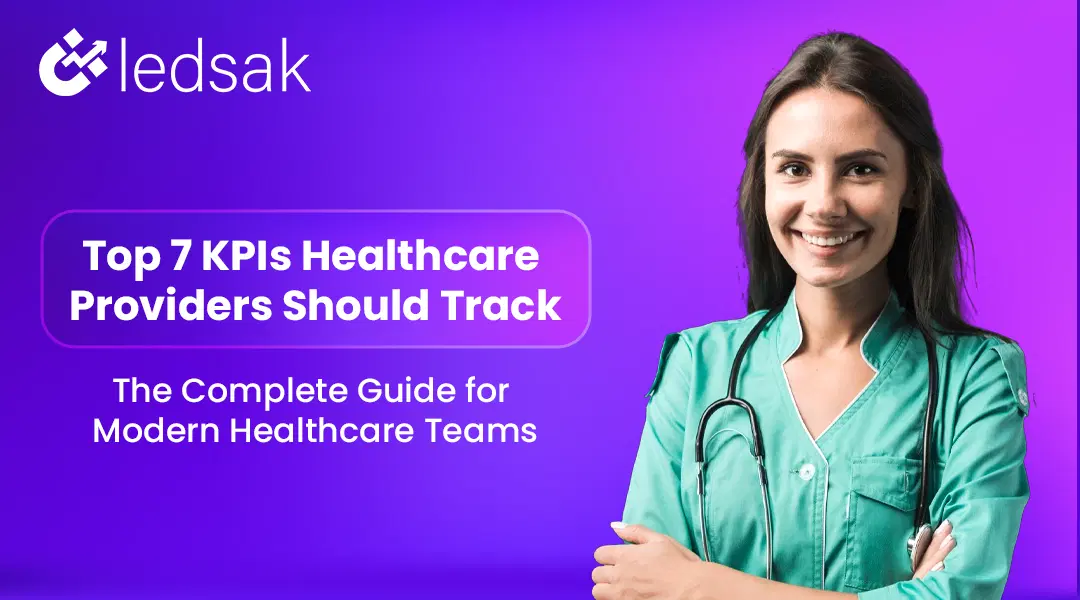
The healthcare industry has changed dramatically in the last decade. Patients expect faster responses, easier communication, smoother processes, and more transparency than ever before. Behind every appointment, every consultation, and every treatment plan is a system that must run with precision and accountability.
That’s why KPIs (Key Performance Indicators) matter so much for hospitals, clinics, diagnostic centers, and multi-branch healthcare facilities. KPIs reveal the truth about your performance — what’s working, what’s not, and where your team needs support. But many healthcare providers still rely on guesswork instead of measurable data, losing high-intent leads, missing follow-ups, and wasting marketing budgets.
This is where Ledsak Healthcare CRM makes all the difference. With real-time dashboards, automated reporting, team login tracking, role-based access, and complete visibility into patient enquiries, Ledsak helps healthcare providers track the KPIs that truly impact growth.
Let’s dive into the Top 7 KPIs every healthcare provider should track, explained in a simple, humanized way, with fewer pointers and more clarity-driven storytelling.
In healthcare, time is not just money — it’s trust. When a patient reaches out for help, they’re often anxious, uncomfortable, or confused. The difference between responding in 30 seconds and responding in 30 minutes can completely change the outcome.
A slow response makes patients feel ignored. A fast response makes patients feel valued.
This is why the Lead Response Time KPI is one of the strongest predictors of patient conversion rates. Providers using Ledsak Healthcare CRM reduce their response time by up to 99% through WhatsApp automation, instant alerts, and intelligent lead assignments. When the right counsellor responds instantly, the journey begins with confidence, not frustration.
Many healthcare providers get decent enquiry volumes but weak appointment conversions. This gap often hides in manual processes, forgotten messages, or inconsistent follow-ups. Tracking the Appointment Conversion Rate gives you the clearest picture of your front-desk performance, counsellor efficiency, and enquiry quality.
With Ledsak Sales CRM for healthcare, providers can see exactly which leads booked appointments, which didn’t, and why. Automated reminders, structured follow-ups, and lead pipelines ensure no patient inquiry falls through the cracks. When your team has visibility, conversions naturally rise.
In healthcare, most patients don’t convert on first contact. They convert after consistent, compassionate follow-ups. Yet most clinics don’t track follow-up quality at all.
This leads to:
Missed treatment opportunities
Lost high-intent leads
Poor patient experience
Revenue leakage
Follow-Up Compliance tells you how well your team nurtures leads over time.
Ledsak Healthcare CRM automates this entire process with scheduled reminders, WhatsApp drips, and counsellor accountability. No one forgets. No patient feels abandoned. Every opportunity gets the attention it deserves.
Great medical care is table stakes. What patients remember is how they were treated — whether the staff listened, communicated clearly, and made them feel safe. The Patient Experience Score captures these emotional moments.
Each interaction is a chance to win trust. Ledsak allows healthcare providers to collect structured feedback, measure satisfaction levels, and identify gaps in patient experience. Over time, this KPI becomes a growth engine — because happy patients don’t just return; they refer.
Managing a healthcare team is not easy. Counsellors, receptionists, coordinators, doctors, and admins work across different departments, often in multiple branches. Without proper tracking, providers struggle to understand who is performing, who needs help, and where workload bottlenecks occur.
With Ledsak’s team login tracking CRM, you can see:
Staff attendance
Login/logout time
Workload distribution
Lead handling efficiency
Follow-up discipline
Conversion performance
This KPI is not about policing — it’s about creating a fair, structured, supportive workflow where every team member knows their responsibilities.
Hospitals and clinics invest heavily in marketing: Facebook Ads, Google Ads, WhatsApp campaigns, billboards, website forms, and offline events. But without tracking, you can’t know which sources bring high-quality patients and which drain your budget.
The Lead Source Performance KPI tells you exactly that.
With Ledsak Healthcare CRM, every lead is automatically tagged, tracked, and analyzed. Providers can compare channels, measure revenue generated, and decide where to invest more. It eliminates guesswork and turns marketing into a measurable science.
Ultimately, the goal of every healthcare provider is not just appointments — but successful treatments.
The Treatment Conversion Rate reveals:
How well your counselling works
Whether your pricing aligns with expectations
Whether your communication builds trust
How effectively your medical team supports decision-making
This KPI reflects the heart of your business: the ability to guide patients from uncertainty to treatment with compassion and clarity. With Ledsak’s advanced pipeline management and reporting tools, you can track treatment readiness, objections, delays, and conversion patterns with precision.
Healthcare is becoming more patient-driven, digital-first, and performance-led. Providers who embrace data gain a competitive advantage — they grow faster, deliver better care, and build stronger patient relationships.
Tracking KPIs with Ledsak Healthcare CRM helps you:
Reduce human error
Improve patient trust
Increase treatment acceptance
Strengthen staff performance
Maximize marketing ROI
Make informed decisions
Deliver seamless patient experiences
This combination of science + structure + empathy is what makes modern healthcare truly effective.
The healthcare providers who thrive in today’s environment are those who measure, track, and improve. KPIs aren’t just numbers — they’re signals. They tell you what patients feel, what your team needs, and how your clinic can grow more sustainably.
With Ledsak Healthcare CRM, tracking these KPIs becomes effortless. Automation handles the routine. Dashboards reveal the truth. Your team gains clarity. Your patients feel cared for. And your clinic becomes a structured, predictable, patient-first ecosystem.
To improve patient experience, increase conversions, and understand clinic performance with real data.
It automates reporting, tracks leads, measures performance, and provides real-time dashboards.
Lead response time — fast replies significantly improve patient conversions.
Yes, Ledsak supports full multi-branch hospital CRM functionality.
Absolutely. Even small clinics grow faster with structured follow-ups, lead management, and performance visibility.